
How to build the FF&E/OS&E budget for a maison hôtelière, a luxury villa or your house ?
A budget for a maison hôtellière is built very much like a hotel budget, just on a smaller, more intimate scale. The furniture (FF&E) and operating equipment (OS&E) remain the core of the investment and of the guest experience, but parameters such as size, level of personalization and operating flexibility slightly shift the way the numbers are structured.
What defines a luxury villa budget
A maison hôtelière is not a simple holiday rental. It is a hybrid product: the warmth and privacy of a home, combined with the standards and services of an upscale hotel. The budget therefore has to reflect both dimensions: professional-grade equipment and a residential feel.
From a budgeting perspective, this means:
Treating each room and common area with the rigor of a hotel (standards, compliance, durability).
Allowing more uniqueness in design, materials and layout than in a standardized hotel.
Accepting a higher cost per key than in a scale-driven hotel project, in exchange for higher perceived value and pricing power.
FF&E/OS&E: same logic as a hotel
Just as in a hotel, FF&E and OS&E directly impact both guest satisfaction and operating performance. A poorly chosen sofa, an underperforming mattress or fragile tableware will quickly translate into bad reviews, higher maintenance and replacement costs.
For a maison hôtelière, the FF&E/OS&E budget should therefore:
Favour durable, service-grade items, even in a domestic-looking setting.
Integrate maintenance and replacement cycles from day one.
Anticipate storage needs (back-up linens, tableware, small equipment).
Align every purchase with the concept and positioning of the property.
Key differences with a hotel budget
While the methodology is close to that of an upscale hotel, a maison hôtelière introduces some nuances:
Fewer rooms (often under 10) but higher expectations per key in terms of space, equipment and décor.
A stronger focus on house-like spaces (kitchen, dining room, terraces, garden) that must be both convivial and operational.
More bespoke or design pieces, which weigh more in the FF&E envelope but structure the identity of the place.
In practice, the budget per square metre or per key is often higher than in a traditional hotel, but the overall budget remains controlled thanks to the limited number of rooms.
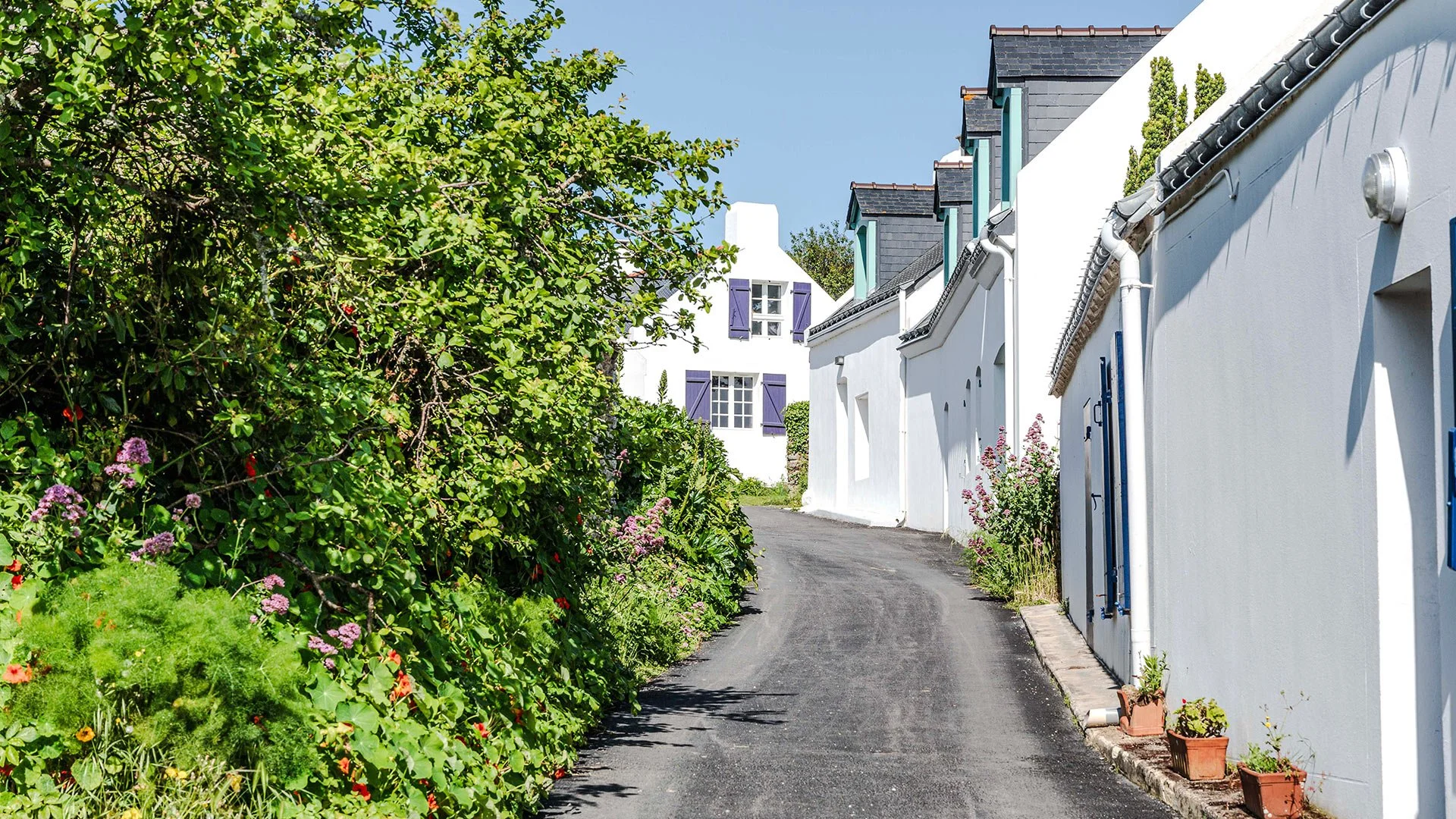
Sublime example of a maison hôtellière in Britany (the real ones know!)
How to structure the FF&E/OS&E budget
A clear breakdown is essential to avoid blind spots and overruns. A typical structure for a maison hôtelière includes:
Guest rooms and suites (beds, mattresses, storage, lighting, textiles).
Bathrooms (sanitary ware, fittings, mirrors, accessories).
Living areas (sofas, armchairs, tables, rugs, decorative lighting).
Kitchen and back-of-house (appliances, utensils, professional-grade small equipment).
Outdoor areas (furniture, lighting, shade systems).
OS&E base (linen stock, tableware, housekeeping and maintenance equipment).
Each line should be quantified room by room, then consolidated at property level, in order to test different design and quality scenarios against the overall budget.
Using FIGURZ for maisons hôtelières
Because the logic is so close to hotels, a specialized FF&E/OS&E budgeting tool is particularly useful for maisons hôtelières. FIGURZ is designed to simulate and model these investments item by item, and works perfectly for maisons hôtelières as soon as the property has fewer than 10 rooms.
In concrete terms, the owner or project manager can:
Build a detailed FF&E/OS&E list per room and per space.
Adjust quantities, specifications and quality levels to test different budget options.
Anticipate operational needs well before construction or renovation works start.
This approach brings hotel-grade precision to the maison hôtelière segment, securing both the guest experience and the long-term profitability of the asset.
