Why Investment Takes Priority Over Operations — Even Though Operations Enable Investment
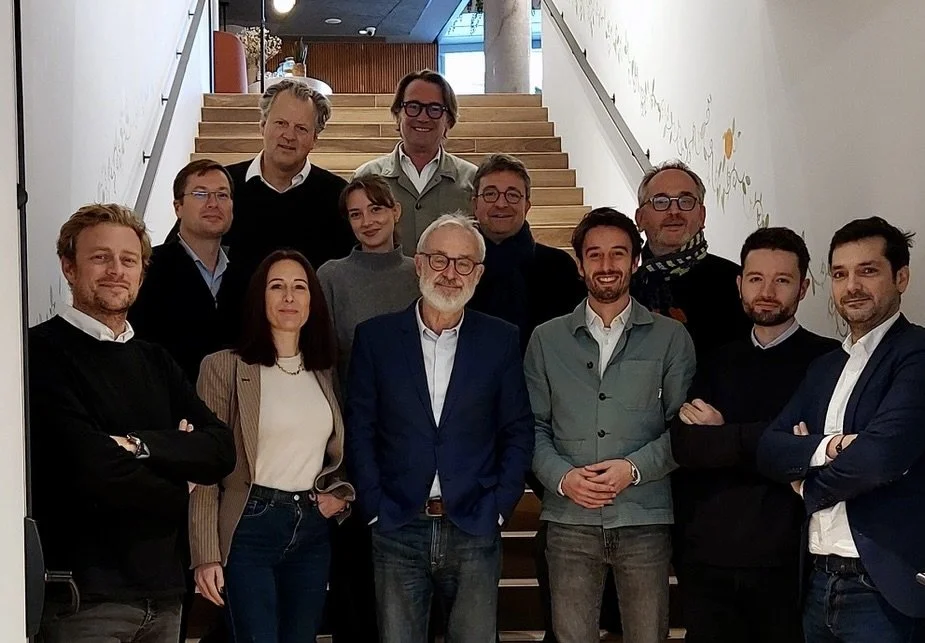
Participants of the event pose for the photo
List of participants in the think tank:
WHAT ARE WE TALKING ABOUT ?
FF&E / OS&E: A Question of Definitions…
Reminder:
OS&E (Operating Supplies and Equipment): This covers smaller equipment and items required for the daily operation of a facility, such as bedding, minibars, hair dryers, bathroom fittings, kitchen utensils, uniforms, cleaning supplies and equipment, glassware, etc. OS&E is generally specified by the operator and included in the investment and/or operating budget (OPEX).
FF&E (Furniture, Fixtures, and Equipment): This includes furniture, seating, freestanding or fixed elements that can be easily dismantled (tables, chairs, headboards, sofas, curtains, rugs, decorative lighting fixtures, wall mirrors, etc.) and any other item typically specified by the interior architect. FF&E is most often included in the investment budget (CAPEX).
On paper, these two definitions work. In reality, however, things are less clear‑cut. As Philippe Chiche notes, “each hotel project has its own definition of FF&E and OS&E.” Max Flageollet agrees, speaking of budget preparation “on a case‑by‑case basis.” According to Gwendoline Théodet, it is therefore essential to clearly define what goes into which budget before a project even begins.
➡ Operator perspective / quote from Florian Bitker:
“The portion allocated to FF&E is growing. Within our hotel group, it has gradually increased from 8% to 12% of a project’s total budget. We also include all bathroom hardware in our FF&E. As for OS&E, it covers everything we use daily with a shorter depreciation period — from glassware to laundry machines. Each manufacturer, supplier, and partner has their own expertise, warranties, and commitments. We therefore ask our faucet supplier for details down to joint lifespan. We have a similar arrangement with our tableware supplier: chips and breakages are replaced for up to three years under warranty.”
Moral of the story: Don’t hesitate to push manufacturers on their commitments. Max Flageollet advocates widespread durability testing — for example, through organizations like FCBA — before seating is delivered to a property, because “the way a private individual uses a chair is nothing like how it’s used in a hotel.”
WHO ARE WE TALKING TO ?
Towards a Common Language for All Project Stakeholders…
A hotel project involves many players: investors, owners, hoteliers, designers, architects, interior architects, space planners, furniture manufacturers… and the list goes on. Yet none enter the project speaking the same language or at the same time. Each thinks differently and at different stages. This is due to differences in training, processes, and priorities.
Gwendoline Théodet acknowledges both “a communication problem” and a lack of “team spirit” at the start of projects. This must be remedied — urgently! Only if all stakeholders align their knowledge and expertise early on can they work in concert, create momentum, and advance together.
➡ The limits of “image‑based logic”:
Sharing perspectives and ideas to realize a common project also means stepping out of well‑worn paths to create hotels that are unique rather than copy‑pasted. Standardized, soul‑less design that fails to evoke emotion is a thing of the past. Clients now want timeless, Instagram‑worthy spaces. Sébastien d’Evry criticizes “yield‑focused hospitality,” which buys inexpensive items on B2C platforms and results in a superficial hotel experience. The “novelty effect” may attract guests, but it does not build loyalty. New arguments and explanations are needed — including those that promote more sustainable hospitality.
WHY INVEST — AND WITH WHOM?
The Importance of Sustainability in Decision‑Making
A recurring issue: Some large hotel groups curate a selection of high‑quality, socially responsible suppliers — a positive step. But these choices can entail additional costs often borne by franchisees. To reduce expenses, franchisees may then opt for cheaper suppliers when restocking: a choice that ultimately contradicts any “RSE” goals.
The Need for Education:
For example, investing in certified wooden chairs is more expensive, yes — but it also means they are not disposable. They can be maintained, repaired, and passed on. “Longer lifespan means deferred CAPEX and optimized net present value,” explains Tanneguy de Guerpel.
“Today many investors release a beautiful, Instagrammable product but ignore its maintenance. We only spend money on what is visible,” regrets Laurent Denis. Thus, it is crucial to educate stakeholders early in the process — in the presence of all parties — about the value of quality, durability, eco‑design, and long‑term ROI. The goal: set a “just” budget before breaking ground and stick to it. Easier said than done, but certainly possible.
Max Flageollet often cites the co‑design and eco‑design project involving Ameublement Français, OKKO Hotels, and HOLDON. Starting in 2024, they brought together all value‑chain participants — hoteliers, operators, interior architects, project managers, and manufacturers — at a project’s inception. Using an eco‑design and “Made in France” approach, this collaboration produced two new room concepts to be deployed across OKKO HOTELS by 2030. It also demonstrated the value of working together from the outset while reducing costs, timelines, and environmental impact.
➡ Repair over disposal:
“I care, I maintain!” could be the motto of a best practice in hospitality. Florian Bitker sets an example with “6 to 10 full‑time technicians” across the seven properties his group operates.
HOW MUCH DOES IT COST?
Keys to Building the Right Budget
At the start of a hotel project, budget definition often breaks down. Everyone offers their “recommendations,” and the sponsor’s immediate reaction is: “It’s too expensive!” Negotiation may follow, but solutions are often the least costly options, erasing any logic of eco‑responsibility or durability. “We cannot afford to buy cheap,” stresses Sébastien d’Evry.
“Setting a budget also means allocating it correctly, including logistics, which is too often overlooked,” reminds Martin Bretécher, who laments the absence of a “holistic view” of expenses at project kick‑off. Philippe Chiche echoes this, especially regarding logistics, which “must be included from the start” — as some international clients already do for their hotel projects. Gaëtan Lagarde points out that budgets often grow during a project because items not initially anticipated must be added — such as certified wood premiums or air freight costs.
For independent benchmarks by hotel category, before anyone in the room has an interest in the number: Hotel FF&E Budget Per Room.
➡ Limits of valuing a hotel development project:
How do you reassure financiers about the viability of a hotel business plan? Tanneguy de Guerpel explains that evaluators — who are financial analysts — review or reconstruct cash flows. They usually understand revenue drivers like room rate and occupancy, but cost data is harder to benchmark and highly dependent on concept and operational efficiency. As a result, evaluators often adopt median expense assumptions, even for FF&E reserves. Specific hotel equipment such as HVAC systems is rarely assessed in depth without construction economists or engineering expertise, which can improve forecasts and reduce uncertainty. Proper upfront scoping, budgeting, and transparency can prevent costly missteps and foster trust.
➡ Don’t stifle creativity:
“Beware preconceptions!” warns Gwendoline Théodet. Designers are often seen as money‑spenders, leading to withholding of budgets for fear of limiting creativity. In fact, an interior designer adds value by offering solutions that respect budget, schedule, usability, and revenue optimization — and by working within constraints.
➡ Knowing how to say no:
“I don’t work without the right budget,” states Sébastien d’Evry. Saying no does not mean abandoning a project — it means explaining what cannot be done, arguing alternatives, reassuring stakeholders, and convincing them there are other ways forward.
THOUGHTS AND FIRST SOLUTIONS
Communicating Expertise
Getting the right messages across and rallying stakeholders around relevant, innovative ideas is key to success. This requires multidisciplinary, intergenerational teams who communicate transparently well before construction begins. It also requires education: explaining to those who lack understanding, reassuring those who are unsure, and engaging those whose values align with the proposed approach.
➡ The secret of a “good brief”: The furniture case, by Max Flageollet:
“A bad brief is having a budget to design custom seating in 3 weeks, when seating development actually requires about 18 months. A good brief takes the time to design the piece, choose fabric, consider comfort and weight, decide on armrests, and reflect on the physical relationship to the product.” Max Flageollet encourages moving away from catalogs toward bespoke, unique design with purpose — design that is repairable and not disposable. “As furniture manufacturers, we should be involved from the beginning to propose solutions around price, usage, finishes… and bring an industrial perspective.”
➡ Practical ideas worth considering:
• For financing demolition, Philippe Chiche suggests “auctions of existing furniture.”
• To clear a building, Max Flageollet recommends Valdelia, a certified eco‑organization for collecting, reusing, and recycling professional furniture and construction materials.
• For sourcing furniture and favoring second‑hand options, Philippe Chiche’s expert team can support procurement leads on hospitality projects.
Max Flageollet is more cautious about furniture rental, which currently applies mainly to catalog pieces and is less suitable for bespoke items. Accounting implications also matter: rental costs affect annual financial statements and operating expenses.
➡ Consulting and a new educational tool:
Martin Bretécher and Gaëtan Lagarde emphasize the importance of a holistic vision and transparency. This led to the creation of FIGURZ, an independent consulting firm for interior fit‑outs and equipment. They developed a budget calculation tool to serve as a compass from the start of a project.
Not sure where your budget stands? Read: Hotel FF&E: The 5 Mistakes First-Time Investors Make.
“Our mission is to be objective in anticipating needs related to interior design and operational equipment,” they explain. To avoid underfunded packages, budget overruns, timeline delays, and ad‑hoc trade‑offs, FIGURZ supports both early project setup and artistic proposals from the architect. Their goal: validate a coherent overall budget aligned with the hotel’s positioning, rationalize the project, and anticipate operational functioning. FIGURZ also helps clients think long‑term, because excellence takes time to mature.
Final words from Florian Bitker:
“A fuzzy project leads to precise mistakes…”
Related articles